- Loading...
- Loading...


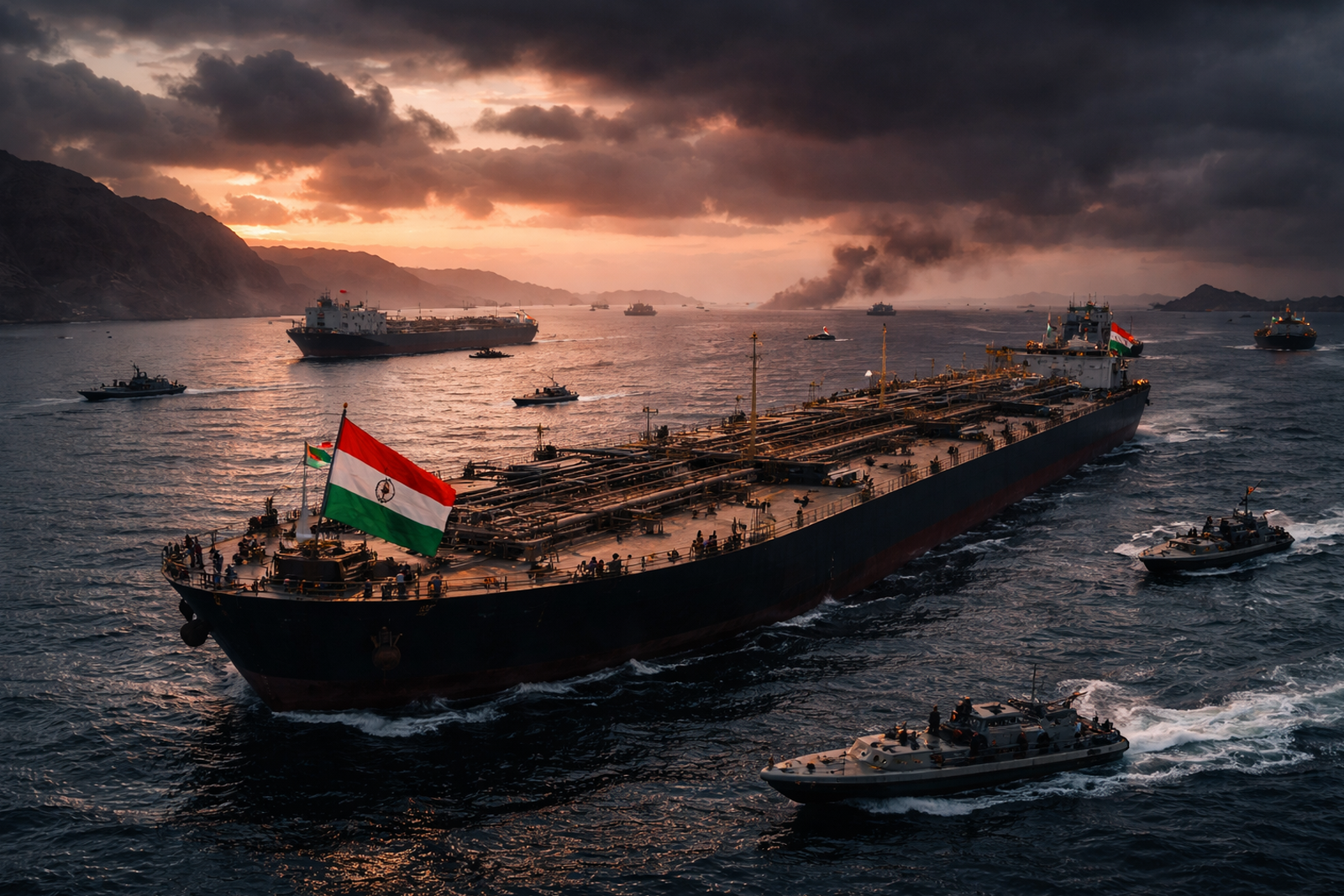
India has raised strong diplomatic concerns after two oil tankers were reportedly prevented from crossing the strategically crucial Strait of Hormuz, a key maritime route for global energy supplies. The development prompted New Delhi to summon Iran’s envoy and seek clarity over the situation, underlining the seriousness with which the issue is being viewed at the highest levels.
The Strait of Hormuz is one of the world’s most vital oil transit chokepoints, connecting the Persian Gulf with the Arabian Sea. A significant portion of the world’s crude oil passes through this narrow stretch, making any disruption a matter of international concern. For India, which relies heavily on imported crude oil, smooth passage through this route is essential for maintaining energy security and economic stability.
In response to the incident, India conveyed its “deep concern” to the Iranian envoy, emphasizing the importance of ensuring safe and uninterrupted passage for commercial vessels. Officials highlighted that such disruptions not only affect bilateral relations but also have broader implications for global trade and energy markets. The government has also called for restraint and adherence to international maritime norms.
The temporary halt of oil tankers has triggered concerns about potential volatility in global oil prices. Even short-term disruptions in the Strait of Hormuz can lead to uncertainty in supply chains, pushing up costs for importing nations like India. Analysts warn that if tensions escalate, it could have a ripple effect on inflation, fuel prices, and overall economic growth.
The incident comes amid already heightened geopolitical tensions in the region. The Strait of Hormuz has historically been a flashpoint due to its strategic significance. Any escalation could draw in multiple global powers, further complicating the situation. India, while maintaining strong ties with countries in the region, continues to advocate for dialogue and peaceful resolution.
India’s measured yet firm response reflects its commitment to safeguarding national interests while promoting regional stability. The government is closely monitoring the situation and may engage with other international partners if needed. Ensuring the free flow of trade through critical maritime routes remains a top priority as global attention turns once again to the sensitive waters of the Strait of Hormuz.
India has expressed serious diplomatic concern after two oil tankers were reportedly prevented from crossing the highly sensitive Strait of Hormuz, a vital global energy corridor. The incident has not only triggered immediate engagement between New Delhi and Tehran but also reignited global anxiety about the vulnerability of key maritime routes. By summoning Iran’s envoy, India signaled that any disruption in this region carries far-reaching implications—not just for bilateral ties, but for the global economy.
The Strait of Hormuz is one of the most critical chokepoints in the world for oil transportation. Nearly a fifth of global petroleum consumption flows through this narrow passage daily.
Even a minor disruption here can send shockwaves across global markets, making stability in the region a top priority for energy-importing countries.
Reports indicate that two oil tankers were stopped or delayed while attempting to cross the strait. While the exact circumstances remain unclear, the incident was serious enough to prompt swift diplomatic action from India.
India has sought clarification from Iran, emphasizing that such incidents must be avoided to maintain trust and stability.
India’s response has been measured but firm. By calling in the Iranian envoy, the government conveyed its “deep concern” and urged adherence to international maritime norms.
India has historically maintained balanced relations in the Middle East, and this approach reflects its effort to protect national interests without escalating tensions.
India is the world’s third-largest oil importer, making it highly sensitive to disruptions in global supply routes.
Given these risks, India is closely monitoring developments and may explore contingency plans if disruptions persist.
The incident has drawn attention from global markets, where even the hint of instability in the Strait of Hormuz can cause volatility.
This shows how interconnected global systems are, with a single maritime disruption affecting economies across continents.
The Strait of Hormuz has long been a flashpoint due to overlapping political, military, and economic interests.
These elements create a fragile environment where even small incidents can escalate quickly. India’s call for restraint reflects awareness of these complexities.
Beyond oil, disruptions in the strait can affect broader global trade networks.
For countries reliant on maritime trade, ensuring safe passage through such chokepoints is essential.
India is likely to adopt a multi-pronged strategy to deal with the situation.
India has been gradually strengthening its energy resilience, and incidents like this reinforce the importance of that strategy.
The global community is also closely watching developments in the region.
Maintaining stability in the Strait of Hormuz is not just a regional issue—it is a global priority.
This incident serves as a reminder of how fragile global energy networks can be. A single disruption in a key location can ripple across economies, affecting everything from fuel prices to food costs.
For India, the situation highlights the need to balance diplomacy, economic planning, and strategic foresight. While immediate concerns focus on tanker movement, the broader issue is ensuring long-term stability in one of the world’s most critical maritime corridors.
India’s swift diplomatic response underscores the seriousness of the tanker disruption in the Strait of Hormuz. As a major energy importer, the country cannot afford prolonged instability in such a vital route. By emphasizing dialogue, international norms, and regional stability, India is positioning itself as both a responsible global player and a nation firmly committed to safeguarding its interests.
The coming days will be crucial in determining whether this incident remains an isolated event or signals deeper tensions ahead. For now, the world watches closely, aware that what happens in this narrow stretch of water can shape the global economic landscape.

In today’s world of endless choices and digital noise, marketing is no longer just about promoting products — it’s about creating meaningful connections. Successful brands focus on building relationships rather than chasing transactions. Marketing that connects transforms audiences into loyal communities by earning their trust, understanding their needs, and delivering genuine value. When businesses prioritize people over promotions, marketing becomes more than strategy — it becomes a relationship built to last.

Odisha’s small businesses are entering a new era — where mobile apps, online payments, and e-commerce aren’t luxuries, but lifelines for growth and survival.

As India enters the second phase of its digital revolution, artificial intelligence and automation are not just transforming industries—they’re redefining what it means to work, earn, and adapt.

The conference brought together officials from ten central districts, including district collectors, tehsildars, registrars, and welfare officers, either virtually or in person.

We glorified sleepless nights, burnout, and exhaustion as signs of ambition. But when did working yourself to the edge become the definition of success?

Not everyone who thrives in tech writes code. Some design the very experiences that make technology human.





Leave Comments