- Loading...
- Loading...


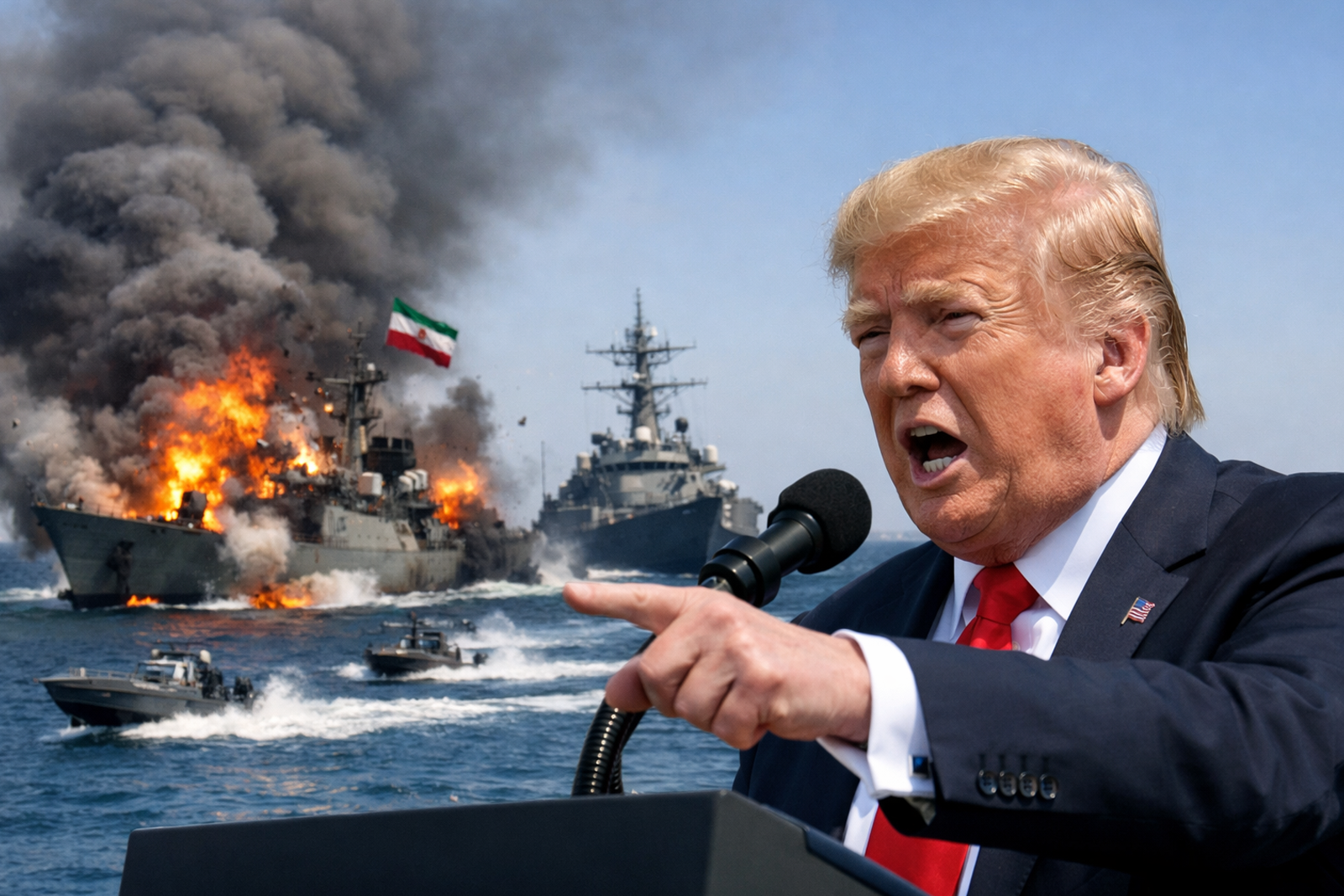
The geopolitical landscape of the Middle East has entered a critical phase as tensions escalate between the United States and Iran. The situation intensified after U.S. President Donald Trump issued a stern warning, declaring that any Iranian warships approaching the American-imposed blockade would face immediate and overwhelming retaliation. This bold statement has further heightened fears of a direct military confrontation in one of the world’s most strategically vital regions.
At the center of the crisis lies the Strait of Hormuz, a narrow yet crucial passage through which nearly a fifth of the world’s oil supply flows. The U.S. naval presence in the area has significantly increased, signaling Washington’s intent to maintain control and deter any perceived threats. Iran, on the other hand, has strongly condemned the blockade, calling it an act of provocation and a violation of international norms.
Military analysts warn that even a minor miscalculation could trigger a broader conflict. Both nations possess formidable naval capabilities, and the confined geography of the Gulf increases the risk of rapid escalation. The situation is further complicated by the involvement of regional allies and global powers, all of whom have vested interests in maintaining stability while safeguarding their own strategic objectives.
Diplomatic channels remain active, but progress appears limited. International organizations and key global players have urged restraint, emphasizing the need for dialogue over confrontation. However, with strong rhetoric dominating both sides, the path toward de-escalation remains uncertain.
For global markets, the implications are significant. Any disruption in oil shipments through the Strait of Hormuz could lead to sharp price increases, affecting economies worldwide. As the standoff continues, the world watches closely, aware that the decisions made in the coming days could shape the future of regional security and global economic stability.
The ongoing confrontation between the United States and Iran has reached a new level of intensity, with strong warnings, increased military deployments, and rising global concern. After U.S. President Donald Trump declared that Iranian warships approaching the American blockade would be “destroyed,” the already fragile situation in the Middle East has become even more volatile. This development signals a shift from diplomatic tension to a potential military flashpoint that could have far-reaching consequences.
At the heart of the crisis is the Strait of Hormuz, one of the most critical maritime routes in the world. This narrow waterway connects the Persian Gulf to the Arabian Sea and serves as a lifeline for global energy supply.
Because of its strategic value, even minor conflicts in the region can create ripple effects across global markets and energy security.
The statement by Donald Trump reflects a more aggressive stance by the United States. The U.S. Navy has strengthened its presence in the region, signaling readiness to enforce its blockade and protect its interests.
This show of strength is intended to deter Iran, but it also raises the stakes, making any encounter between naval forces highly sensitive.
Iran has strongly condemned the U.S. actions, labeling them as unlawful and provocative. Iranian officials have stated that they will defend their territorial waters and national interests at all costs.
Iran’s geographic position along the Strait gives it a tactical advantage, allowing it to exert influence over maritime traffic despite facing a stronger U.S. military.
One of the most concerning aspects of the situation is how quickly it could escalate into a full-scale conflict. The presence of heavily armed naval forces in a confined area creates a high-risk environment.
Experts warn that once a military exchange begins, controlling escalation would become extremely difficult.
The crisis is not limited to military or political implications—it also has serious economic consequences. The Strait of Hormuz plays a vital role in global trade, especially in energy markets.
Countries like India, China, and Japan, which rely heavily on oil imports, are particularly vulnerable to such disruptions.
Despite the aggressive rhetoric, global leaders and organizations continue to push for diplomatic solutions. The international community recognizes the dangers of escalation and is urging restraint.
However, diplomatic progress remains slow due to deep mistrust and conflicting strategic interests.
The Middle East is already a region marked by complex alliances and ongoing conflicts. The U.S.–Iran standoff could further destabilize the area.
A broader conflict could have long-term consequences for regional peace and security.
The coming days and weeks will be crucial in determining the direction of this crisis. Both nations face a choice between escalation and restraint.
The world is watching closely as events unfold, aware that the outcome of this standoff could reshape geopolitical dynamics for years to come.
The escalating tensions between the United States and Iran highlight the fragile balance of power in the Middle East. With strong warnings from Donald Trump and growing military activity around the Strait of Hormuz, the risk of conflict is higher than ever. While diplomatic efforts continue, the situation remains uncertain and highly volatile.
In a region where a single misstep can trigger widespread consequences, the need for cautious decision-making and international cooperation has never been more critical.

In today’s world of endless choices and digital noise, marketing is no longer just about promoting products — it’s about creating meaningful connections. Successful brands focus on building relationships rather than chasing transactions. Marketing that connects transforms audiences into loyal communities by earning their trust, understanding their needs, and delivering genuine value. When businesses prioritize people over promotions, marketing becomes more than strategy — it becomes a relationship built to last.
Odisha’s small businesses are entering a new era — where mobile apps, online payments, and e-commerce aren’t luxuries, but lifelines for growth and survival.

As India enters the second phase of its digital revolution, artificial intelligence and automation are not just transforming industries—they’re redefining what it means to work, earn, and adapt.

The conference brought together officials from ten central districts, including district collectors, tehsildars, registrars, and welfare officers, either virtually or in person.

We glorified sleepless nights, burnout, and exhaustion as signs of ambition. But when did working yourself to the edge become the definition of success?

Not everyone who thrives in tech writes code. Some design the very experiences that make technology human.





Leave Comments