- Loading...
- Loading...


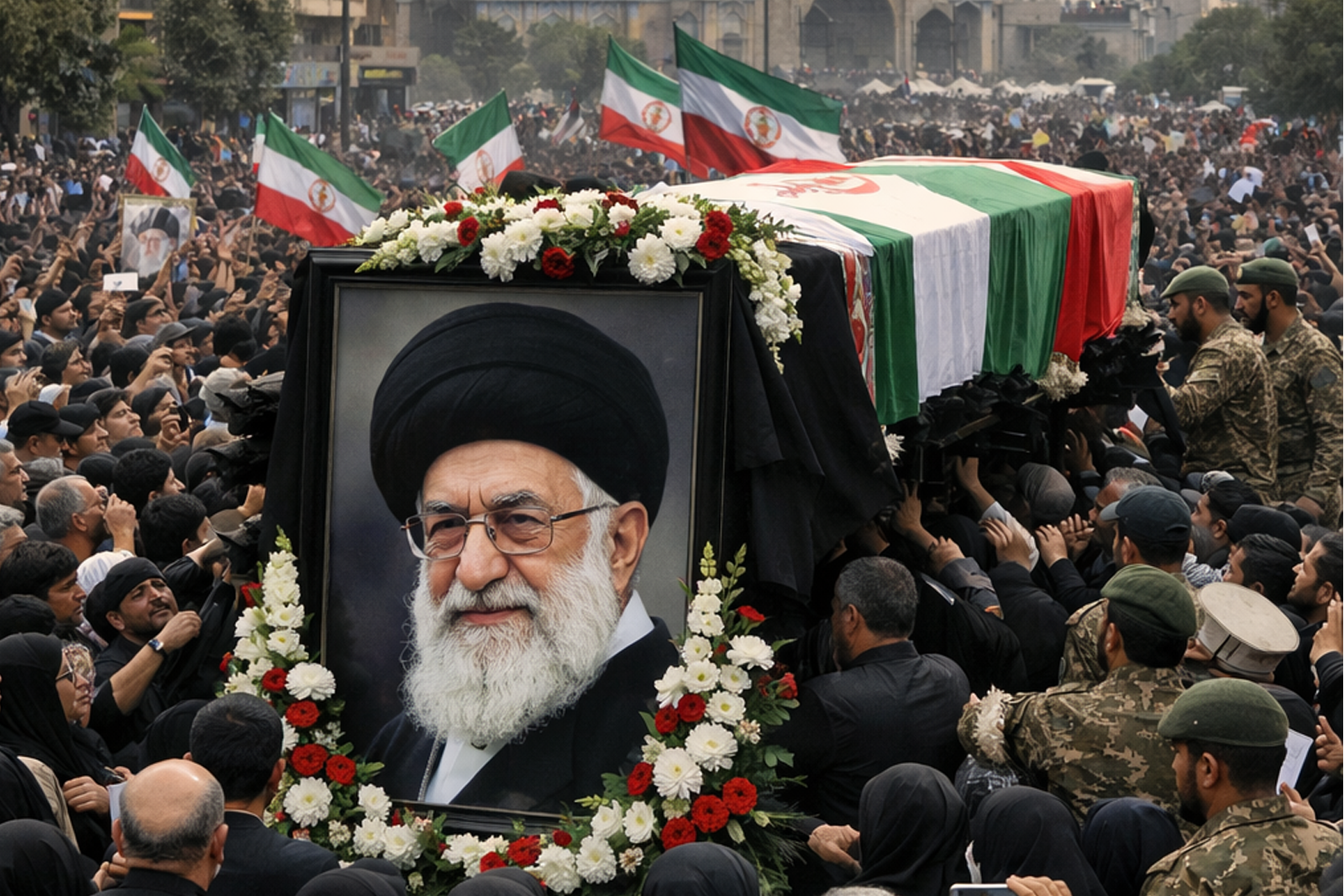
A wave of grief and uncertainty has spread across Iran after reports emerged about the death of Supreme Leader Ali Khamenei during a period of escalating military tensions in the region. Authorities announced a nationwide 40-day mourning period, a significant cultural and religious observance, as large crowds gathered in major cities to express sorrow and solidarity.
In Tehran, thousands of people assembled in public squares and near religious centers, holding candles, reciting prayers, and carrying national flags. The emotional gatherings reflected both grief and concern about the country’s political future. Security measures were strengthened across sensitive locations as officials urged citizens to remain calm while national institutions continue their constitutional processes.
The reported incident comes amid heightened geopolitical strain involving the United States and Israel, with regional developments drawing global attention. Analysts suggest that the situation could significantly impact diplomatic relations, energy markets, and security strategies across the Middle East.
Iran’s leadership structure is expected to follow established legal and religious procedures to ensure continuity of governance. Experts note that such transitions are closely monitored both domestically and internationally because of Iran’s strategic role in regional politics.
Meanwhile, citizens across different provinces have begun organizing memorial gatherings, highlighting the deep influence of the Supreme Leader’s position in Iran’s political and religious framework. Media coverage continues to evolve as official statements and international responses emerge.
As the mourning period unfolds, global observers remain focused on how Iran manages internal stability while navigating an increasingly complex geopolitical landscape.
Reports surrounding the death of Ali Khamenei have triggered an intense emotional and political response across Iran, as the nation enters a 40-day mourning period rooted in religious tradition. The announcement comes during a phase of rising geopolitical tensions in the Middle East, drawing attention from governments, analysts, and international organizations worldwide.
Large gatherings, prayer ceremonies, and symbolic tributes have begun in several cities, reflecting the importance of the Supreme Leader’s role in Iran’s governance and religious structure. Officials have emphasized unity and stability while constitutional procedures move forward.
In the capital city of Tehran, thousands of citizens gathered in public squares, mosques, and cultural centers to express grief. Many participants carried portraits, candles, and national flags while reciting prayers.
Community prayer events organized by local religious institutions
Candlelight gatherings in major city centers
Increased media coverage highlighting the leader’s political legacy
Public messages calling for national unity
The 40-day mourning period holds cultural and religious significance in Iranian society, often marking reflection, remembrance, and collective solidarity.
Iran’s governance system combines elected institutions with religious authority. The Supreme Leader holds one of the most powerful roles in the country, influencing defense policy, judiciary oversight, and strategic direction.
Following such a major development, established constitutional procedures are expected to guide the transition process.
Consultation among senior clerical authorities
Review by the Assembly of Experts
Interim administrative continuity across government bodies
Security coordination to maintain stability
Political analysts note that continuity of institutions is a priority during periods of leadership change, especially in countries with strong centralized authority structures.
The situation has gained global focus due to ongoing tensions involving the United States and Israel. Recent military developments and diplomatic disagreements have already placed the region under intense observation.
International responses have largely emphasized restraint and dialogue to avoid further escalation.
Possible impact on regional security alliances
Energy market fluctuations linked to Middle East instability
Diplomatic negotiations affecting long-term geopolitical balance
Risk of expanded conflict scenarios
Foreign policy experts suggest that the coming weeks will be critical in determining how regional relationships evolve.
Authorities across Iran have increased security presence around strategic locations, including government buildings, transportation hubs, and public gathering areas. Officials have stated that the measures are precautionary and aimed at ensuring public safety.
Deployment of additional security personnel in major cities
Monitoring of sensitive infrastructure
Coordination between national and local enforcement agencies
Public advisories encouraging calm and cooperation
Such steps are common during large-scale national events to maintain order and prevent misinformation or unrest.
The 40-day mourning observance has deep roots in Islamic tradition and is widely practiced in Iran during significant religious or national losses. The period allows communities to organize remembrance ceremonies and spiritual gatherings.
Recitation of religious texts
Memorial lectures reflecting on leadership and legacy
Charitable activities conducted in memory of the deceased
Community meals and gatherings promoting unity
Religious scholars explain that the tradition symbolizes reflection and spiritual continuity rather than only public mourning.
Major political developments in the Middle East often influence global economic conditions, particularly energy markets. Iran’s strategic position in global oil supply routes makes the situation especially significant for international observers.
Oil price volatility due to geopolitical uncertainty
Investor caution across regional markets
Currency fluctuations influenced by political developments
Trade policy adjustments in response to diplomatic changes
Market analysts are closely tracking official announcements and regional responses for clearer economic direction.
Local and international media outlets are providing continuous updates as new details emerge. Digital platforms have also seen a surge in discussions, highlighting the role of social media in shaping public awareness during major global events.
Live coverage of public gatherings and official statements
Expert discussions on political and strategic outcomes
Increased fact-checking efforts to address misinformation
Global newsroom focus on Middle East developments
Accurate reporting remains essential as rapidly changing situations often lead to speculation.
While the mourning period continues, attention remains focused on both domestic governance and international diplomacy. Observers expect gradual clarity regarding leadership processes and foreign policy direction.
Official announcements regarding leadership transition
Diplomatic reactions from regional and global powers
Security updates across strategic areas
Economic indicators connected to energy markets
The coming weeks are expected to play a crucial role in shaping both Iran’s internal political landscape and broader regional stability.
The declaration of a 40-day mourning period marks a deeply significant moment for Iran, blending cultural tradition with political transition. Public gatherings across the country demonstrate the emotional impact of the development, while international stakeholders closely observe potential geopolitical consequences.
As events continue to unfold, the balance between internal stability and regional diplomacy will remain central. The situation underscores how leadership changes in strategically important nations can influence not only domestic governance but also global political and economic dynamics.

In today’s world of endless choices and digital noise, marketing is no longer just about promoting products — it’s about creating meaningful connections. Successful brands focus on building relationships rather than chasing transactions. Marketing that connects transforms audiences into loyal communities by earning their trust, understanding their needs, and delivering genuine value. When businesses prioritize people over promotions, marketing becomes more than strategy — it becomes a relationship built to last.
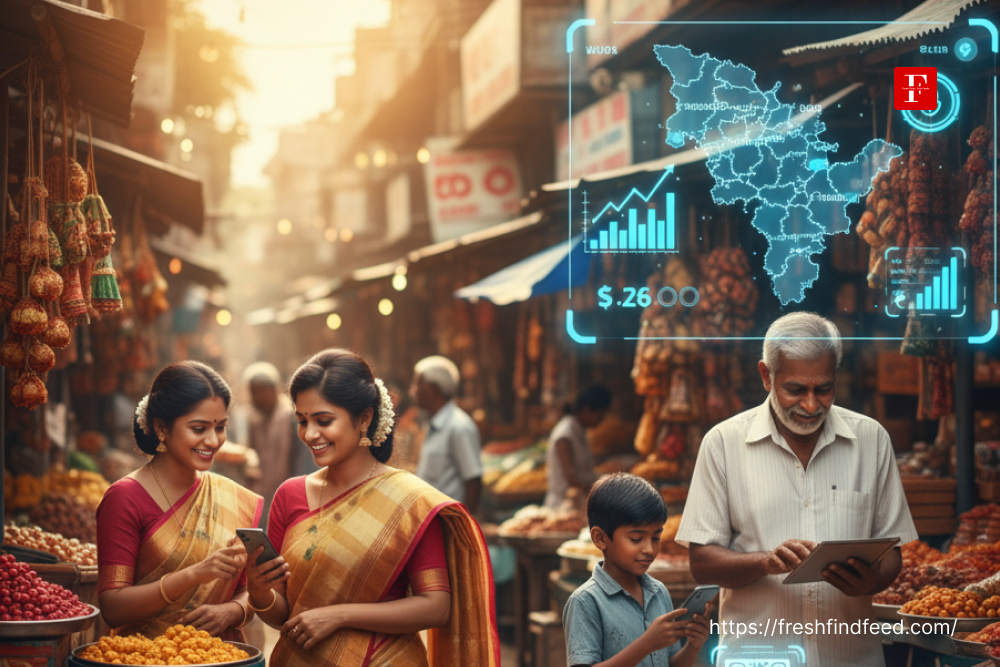
Odisha’s small businesses are entering a new era — where mobile apps, online payments, and e-commerce aren’t luxuries, but lifelines for growth and survival.

As India enters the second phase of its digital revolution, artificial intelligence and automation are not just transforming industries—they’re redefining what it means to work, earn, and adapt.

The conference brought together officials from ten central districts, including district collectors, tehsildars, registrars, and welfare officers, either virtually or in person.

We glorified sleepless nights, burnout, and exhaustion as signs of ambition. But when did working yourself to the edge become the definition of success?

Not everyone who thrives in tech writes code. Some design the very experiences that make technology human.




Leave Comments