- Loading...
- Loading...



On 27 September 2025, in Jharsuguda, Odisha, Prime Minister Narendra Modi inaugurated and laid foundation stones for over ₹60,000 crore worth of development projects. In a speech, he emphasized that India is now among the world’s top-5 countries with indigenous technology in its telecom sector.
These initiatives—across telecom, rail, education, health, housing, and rural welfare—are meant to connect distant villages, upgrade infrastructure, and strengthen what the government calls Atmanirbharta (self-reliance). But how much is rhetoric, and how much is real change?
Here are the main projects announced, and their likely impacts:
| Sector | What’s Being Done / Announced | Scale / Coverage | Potential Impact |
|---|---|---|---|
| Telecom / Digital connectivity | Over 97,500 4G mobile towers built using indigenous tech; ~92,600 by BSNL. Under Digital Bharat Nidhi, about 18,900 towers to connect ~26,700 villages currently unserved (including remote, border, LWE-affected areas). Many towers are solar powered, becoming one of India’s largest clusters of green telecom sites. | Cost: ~₹ 37,000 crore for the 4G towers. | Improved connectivity, especially in remote and border areas. Better access to information, services (e-health, e-education), more inclusion. Also signals push toward self-reliant telecom manufacturing. |
| Rail & Transport Connectivity |
• Flyover at Sambalpur–Sarla. • Doubling of Koraput–Baiguda line. • Manabar–Koraput-Gorapur line. • Flagging off the Amrit Bharat Express between Berhampur and Udhna (Surat). |
These lines are in hilly, tribal, or less accessible regions. The train link connects cross-states. | Improved freight & passenger movement, boost to tourism, better regional trade, reduced travel time. Can also spur development along these corridors. |
| Higher Education / Skills / Innovation |
• Expansion of 8 IITs across India (not all in Odisha) with addition of 10,000 seats over next 4 years, with associated research parks. • Local schemes in Odisha: MERITE (engineering/polytechnic institutions), Skill Development Phase II (World Skill Centres in Sambalpur & Berhampur), upgrades of ITIs (some becoming Centres of Excellence), precision engineering building, free Wi-Fi in 130 higher-ed institutions for ~2.5 lakh students daily. |
These touch both state and national level. The student numbers are sizable. | Could help reduce skill gaps, give youth better employability, enable research & innovation. It also moves Odisha into a more central position in India’s education & industry supply chain. |
| Healthcare | Upgrades to MKCG Medical College, Berhampur & VIMSAR, Sambalpur into super-speciality hospitals. Enhanced trauma units, more beds, maternal & child healthcare, dental colleges etc. | These are major health institutions serving large populations in southern/central Odisha. | Better access to advanced medical care locally; less need to travel to metros; improved health outcomes; potential to reduce healthcare disparities. |
| Housing & Welfare | Under Antyodaya Gruha Yojana, sanction orders to 50,000 beneficiaries for pucca homes; includes vulnerable rural families (widows, disabled, etc.). | Significant numbers; especially impacts poorer households and those in remote areas. | Better housing security, dignity, likely to improve quality of life; may reduce rural-urban migration pressures. |
Modi emphasized that India now belongs among the top five countries globally that launch 4G services using domestic/indigenous tech.
The BSNL rollout is central to that claim: using its own tech stack (i.e. made in India) to set up tens of thousands of 4G towers.
Use of solar power for many towers is being highlighted: not just connectivity but sustainable, green infrastructure.
Why was Odisha chosen for this bundling of so many projects / announcements?
The location, Jharsuguda, is strategic: a mineral-rich district, industrially active, yet with many rural and tribal hinterlands. Boosting infrastructure here can have outsized spillovers.
Odisha has long been a focus in terms of connectivity gaps (remote villages, border areas, left-wing extremism affected zones). These projects target exactly those gaps (telecom towers, health, transport).
Politically, Odisha is significant: the BJP is relatively new in power in the state (June 2024). Big announcements reinforce commitment to development and help with political legitimacy.
While the announcements are large and ambitious, there are potential hurdles:
Implementation & Maintenance
Building 97,500 towers is one thing; maintaining them (especially in remote or difficult terrain) is another. Solar towers need upkeep of panels, batteries, etc.
Ensuring that new hospitals, flyovers, rail lines are finished on time, with all features (trauma units, maternal health, etc.), not just formal inaugurations.
Connectivity in Practice
Even with towers, issues like last-mile connectivity, affordability of devices, digital literacy remain. A village may have 4G signal but lack sufficient infrastructure or users to benefit fully.
Quality & Equitability
Does “green telecom cluster” truly deliver quality power backup, robust service?
Will upgrades in IITs / ITIs / skill centres reach poorer / tribal / women students in Odisha fairly?
Budget, Cost Overruns & Local Capacity
Cost escalations are common in infrastructure. Local governments, contractors, supply chains will be under stress.
Locally available skilled manpower will be needed; otherwise, delays or extra costs.
Sustainability & Environmental Impact
Solar-powered telecom sites are good, but solar panel disposal, ecological impacts of construction in fragile remote areas need planning.
Railway/transport lines will go through ecologically sensitive zones (in parts of Odisha) which means environmental clearances, impact mitigation, etc.
Digital Inclusion & National Security: Better telecom connectivity in border & remote areas has implications for security and governance, besides just convenience. Indigenous telecom tech reduces dependence on foreign vendors.
Economic Uplift in Under-served Regions: Rail connectivity, super specialty hospitals, better education can stem migration, create local jobs, and spread growth more evenly.
Image & Geopolitics: The “India among top-5” claim helps position India as a technology-maker (not just user), boosting soft power, investor confidence.
Political Signaling: For both state and the Centre, these announcements help shore up developmental credentials, especially in election cycles.
How quickly these projects transition from “announcement / foundation stone” to actually delivering services.
Monitoring cost, quality, especially in remote areas.
How well the “indigenous technology” claim holds: e.g., how much of the 4G stack is domestically developed vs partly imported.
Uptake among communities: are the villages connected, are people using the services (education, healthcare), has poverty / unemployment in affected areas reduced?
Sustainability: green energy, environmental clearances, maintenance.
The ₹60,000-crore package in Odisha is ambitious—and in many respects, encouraging. If executed well, it can close many of the state’s infrastructure and connectivity gaps, boost health and education, and bring development to remote regions.
The emphasis on indigenous technology, solar-powered towers, and self-reliant telecom is as much symbolic as functional—it’s about India wanting to be a maker, not just a consumer. PM Modi’s “top-5” claim is a statement of intent: India aims to compete in the global league.
But the real test will be if people in Odisha—in its villages, border areas, tribal hills—feel the difference.

In today’s world of endless choices and digital noise, marketing is no longer just about promoting products — it’s about creating meaningful connections. Successful brands focus on building relationships rather than chasing transactions. Marketing that connects transforms audiences into loyal communities by earning their trust, understanding their needs, and delivering genuine value. When businesses prioritize people over promotions, marketing becomes more than strategy — it becomes a relationship built to last.
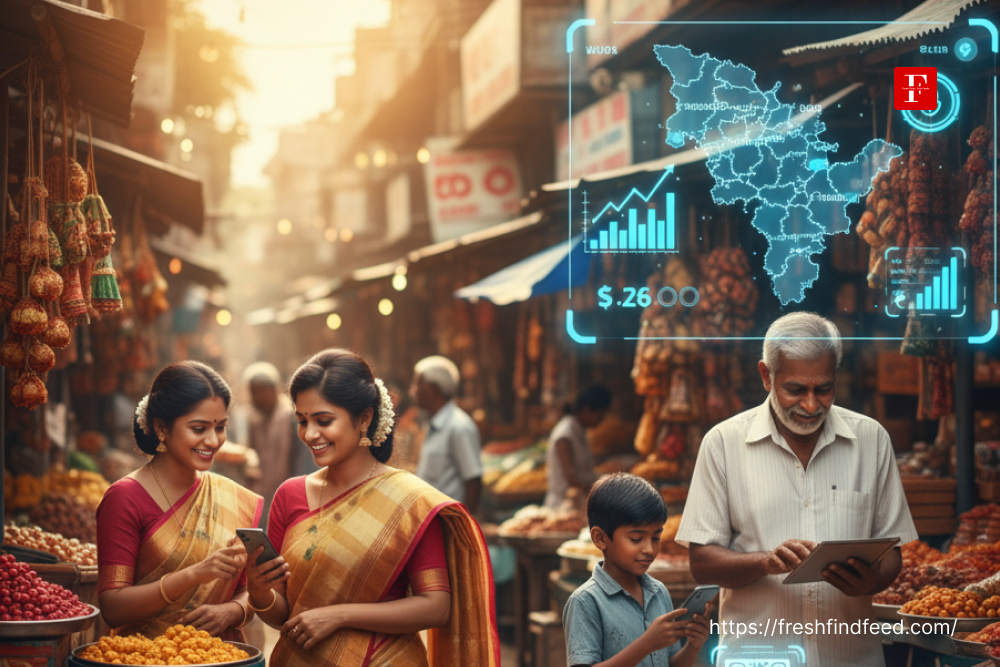
Odisha’s small businesses are entering a new era — where mobile apps, online payments, and e-commerce aren’t luxuries, but lifelines for growth and survival.

As India enters the second phase of its digital revolution, artificial intelligence and automation are not just transforming industries—they’re redefining what it means to work, earn, and adapt.

The conference brought together officials from ten central districts, including district collectors, tehsildars, registrars, and welfare officers, either virtually or in person.

We glorified sleepless nights, burnout, and exhaustion as signs of ambition. But when did working yourself to the edge become the definition of success?

Not everyone who thrives in tech writes code. Some design the very experiences that make technology human.








Leave Comments