- Loading...
- Loading...


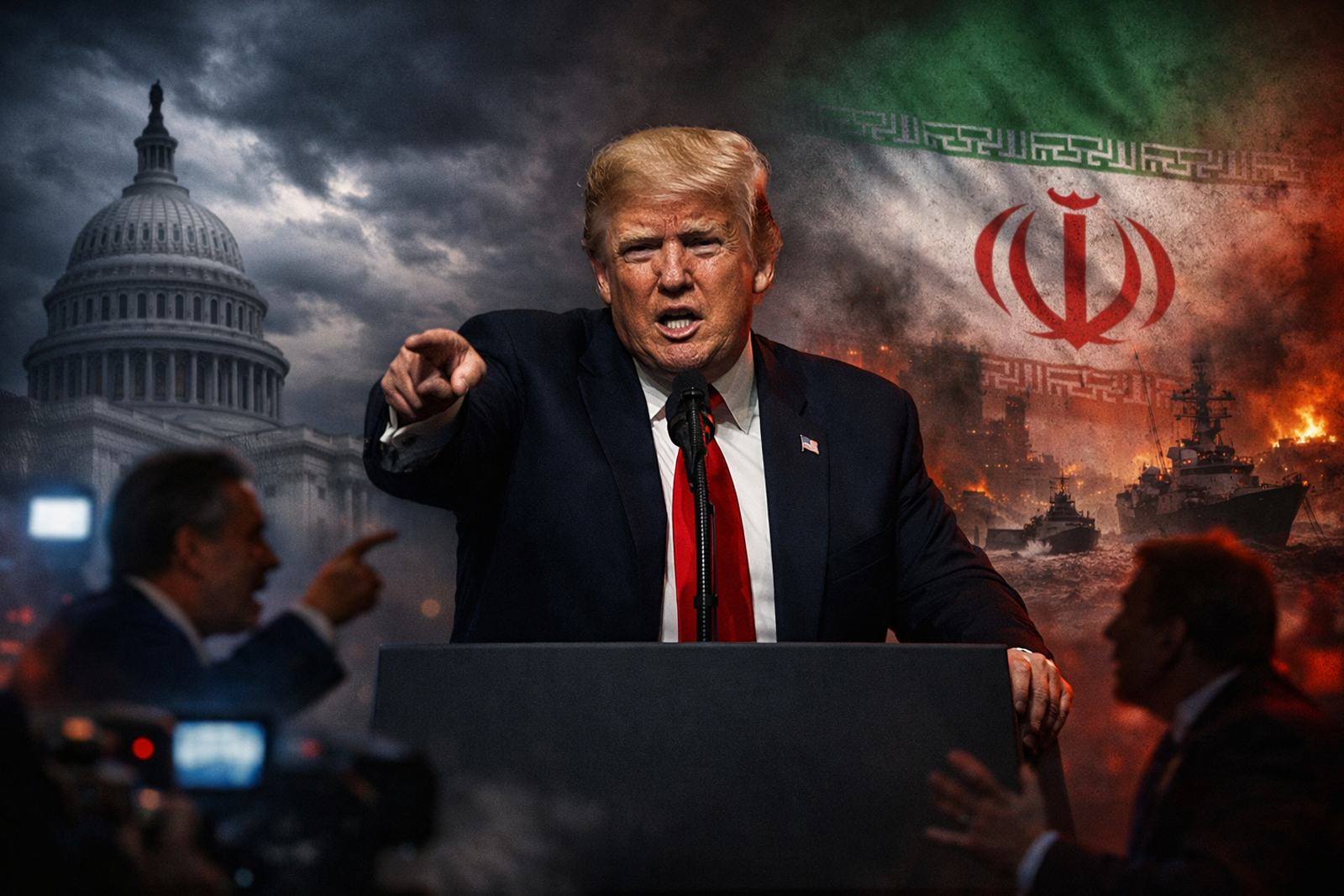
Former U.S. President Donald Trump has declared that he is “under no pressure” to push forward a ceasefire agreement involving Iran, Israel, and the United States, signaling that any peace initiative would happen strictly on terms favorable to American interests. His remarks come at a time when diplomatic efforts are being closely watched amid fears of wider conflict in the Middle East.
Speaking in his trademark combative tone, Trump dismissed reports suggesting that Washington is rushing to secure an agreement with Tehran. He argued that the U.S. retains the upper hand and does not need to negotiate from a position of urgency. According to Trump, recent media coverage has exaggerated the pressure on American leadership to quickly broker peace in the region.
In the same statement, Trump turned his criticism toward major news outlets, accusing them of spreading “fake news” about the negotiations. He claimed that inaccurate reporting is creating confusion over the real state of diplomacy between the involved nations. By framing the narrative as media distortion, Trump sought to reassure supporters that the U.S. is not making concessions behind the scenes.
Trump also intensified his rhetoric against Democratic leaders, branding some of them as “traitors” for what he described as weak foreign policy positions. He accused them of undermining American leverage by advocating softer diplomatic strategies with Iran. The sharp political language reflects how international conflicts often become central issues in domestic political battles, especially during moments of heightened global uncertainty.
The broader geopolitical backdrop remains fragile. Tensions between Israel and Iran have escalated in recent months, raising concerns about military confrontation that could destabilize the region. Any ceasefire arrangement would likely involve complicated negotiations around military operations, sanctions, and security guarantees for all parties.
Trump’s latest remarks highlight the delicate balance between diplomacy and political messaging. While ceasefire talks are often presented as urgent humanitarian measures, leaders also use such moments to project strength and gain political advantage. Trump’s insistence that he faces “no pressure” is aimed at reinforcing the perception that American negotiators remain in control.
As diplomatic discussions continue, the world is watching to see whether rhetoric will give way to meaningful progress. For now, Trump’s comments underscore the political tensions surrounding any potential peace deal and reveal how deeply intertwined international diplomacy has become with domestic political rivalry.
Former U.S. President Donald Trump has once again stirred global attention by asserting that he is “under no pressure” to finalize any ceasefire arrangement involving Iran, Israel, and the United States. His remarks come at a time when tensions in the Middle East remain high and diplomatic channels are actively exploring ways to avoid further escalation. Trump’s statement not only reflects his stance on foreign policy but also underscores the intersection of international negotiations with domestic political narratives.
Trump’s central message revolves around maintaining strategic leverage. By stating he is not under pressure, he aims to project confidence and control over the situation.
This approach aligns with his broader foreign policy philosophy, where strength and unpredictability are often used as tools to influence adversaries.
The potential ceasefire between Iran and Israel is part of a larger effort to prevent a broader regional conflict.
Any agreement would likely involve complex conditions, including military de-escalation, regional security assurances, and economic considerations such as sanctions.
Trump did not hold back in his criticism of the media, accusing several outlets of misrepresenting the situation.
His remarks reflect an ongoing tension between political figures and media organizations, particularly during high-stakes international developments.
In addition to media criticism, Trump launched a strong attack on Democratic leaders.
This rhetoric highlights how foreign policy issues often become deeply politicized within the United States, especially during periods of international crisis.
Trump’s statements are not only about diplomacy but also about shaping public perception.
Political messaging plays a critical role in how leaders frame international events, often blending policy with public relations.
Reaching a ceasefire agreement between Iran and Israel is far from straightforward.
Any successful deal would require careful balancing of interests, along with guarantees that both parties can accept.
The outcome of these negotiations carries significant global consequences.
The situation highlights how regional conflicts can quickly evolve into global concerns, affecting economies and security far beyond the Middle East.
Leadership style plays a crucial role during moments of geopolitical tension.
The effectiveness of such leadership strategies often depends on the broader diplomatic context and the willingness of all parties to engage constructively.
As ceasefire discussions continue, the path forward remains uncertain.
Trump’s remarks add another layer to an already complex situation, სადაც diplomacy, politics, and public messaging intersect.
The ongoing ceasefire discussions involving Iran, Israel, and the United States represent a critical moment in global geopolitics. Donald Trump’s assertion that he is “under no pressure” reflects a broader strategy of projecting strength while challenging both media narratives and political opponents. As tensions persist, the world watches closely to see whether diplomacy can prevail over conflict. The coming weeks will be crucial in determining whether this volatile situation moves toward resolution or further escalation.

In today’s world of endless choices and digital noise, marketing is no longer just about promoting products — it’s about creating meaningful connections. Successful brands focus on building relationships rather than chasing transactions. Marketing that connects transforms audiences into loyal communities by earning their trust, understanding their needs, and delivering genuine value. When businesses prioritize people over promotions, marketing becomes more than strategy — it becomes a relationship built to last.

Odisha’s small businesses are entering a new era — where mobile apps, online payments, and e-commerce aren’t luxuries, but lifelines for growth and survival.

As India enters the second phase of its digital revolution, artificial intelligence and automation are not just transforming industries—they’re redefining what it means to work, earn, and adapt.

The conference brought together officials from ten central districts, including district collectors, tehsildars, registrars, and welfare officers, either virtually or in person.

We glorified sleepless nights, burnout, and exhaustion as signs of ambition. But when did working yourself to the edge become the definition of success?

Not everyone who thrives in tech writes code. Some design the very experiences that make technology human.




Leave Comments